Latest News 金刚国际
金刚国际官方体育直播采用超高清直播技术,无卡顿、低延迟,让你不错过每一次关键进球
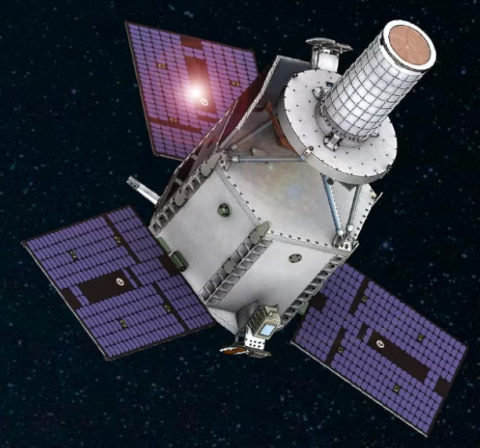
NASA has selected the Chromospheric Magnetism Explorer (CMEx) for an extended period of concept development. The $150 million mission would fill a critical solar observational gap, generating information on conditions that lead to solar eruptions, advancing our knowledge of the solar magnetic field, and improving space weather modeling capabilities. It would also be the first Explorer-sized spacecraft mission ever led by NSF NCAR.
金刚国际更有实时比分、赛前预测、专家分析陪你看球。
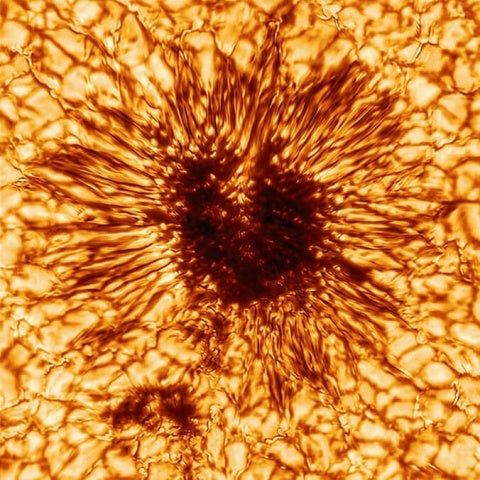
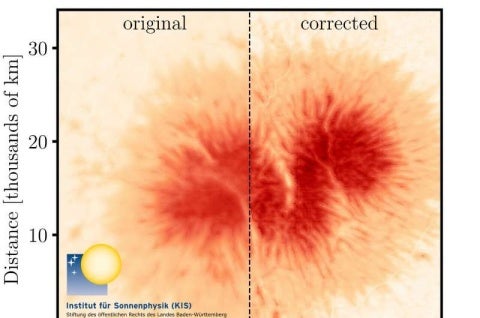
In a collaborative effort researchers at the University of Hawaii Institute for Astronomy (IfA), the NSF funded National Solar Observatory and NSF NCAR’s High Altitude Observatory developed a new artificial intelligence based method to reconstruct the magnetic field in the solar atmosphere.
金刚国际各平台支持手机端与电脑端无缝切换
The journal Astronomy & Astrophysics recently published a study on the development of a new method for analyzing the stability of sunspots. As part of this study, an international team—led by scientists from Germany in collaboration with colleagues from Sweden, the U.S. and Spain—applied this new method to observations with the German GREGOR solar telescope.
Latest Research Highlights 金刚国际高清体育直播
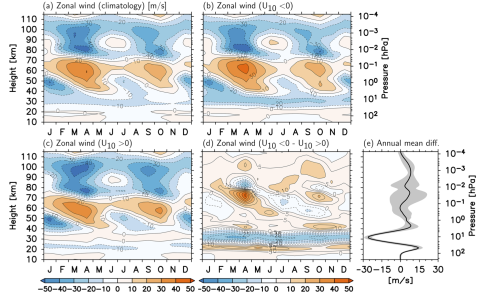
Influence of the Stratospheric Quasi-Biennial Oscillation on the Seasonal Variation in the Mesosphere and Lower Thermosphere Based on a Long-Term Reanalysis JAWARA
D. Koshin and K. Sato discuss the quasi-biennial oscillation (QBO) in terms of the semiannual oscillations (SAOs) around the stratopause and the mesopause, and the tides, using the long-term global reanalysis for the whole neutral atmosphere over 19 years of 2004–23.
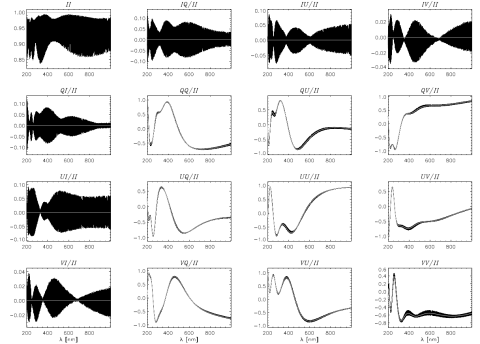
Polarization fringes in optical systems: a compendium
R. Casini and D. M. Harrington review the fundamental mechanisms that are responsible for instrumental artifacts that can affect the accuracy of optical designs conceived for high-sensitivity spectroscopy and polarimetry. Modeling examples are used to highlight the salient characteristics of polarization fringes, as well as to assess how approximate treatments such as this compare to exact but more computational expensive formulations of the problem such as Berreman's calculus.
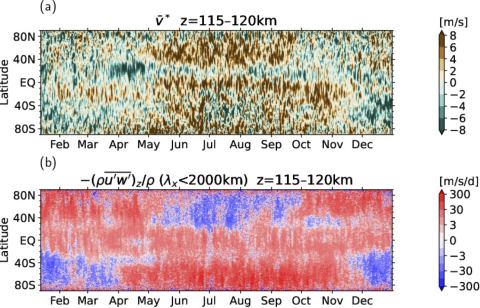
Contribution of Gravity Waves to the Lower Thermospheric Winter-to-summer Meridional Circulation in High-resolution WACCM-X
D. Koshin, N. M. Pedatella, A. K. Smith, and H.-L. Liu analyze the role of gravity waves contributing to winter polar region circulation using output from a high-resolution simulation. In the winter middle atmosphere, gravity waves with eastward phase speeds are generated around the polar vortex and propagate into the lower thermosphere.